
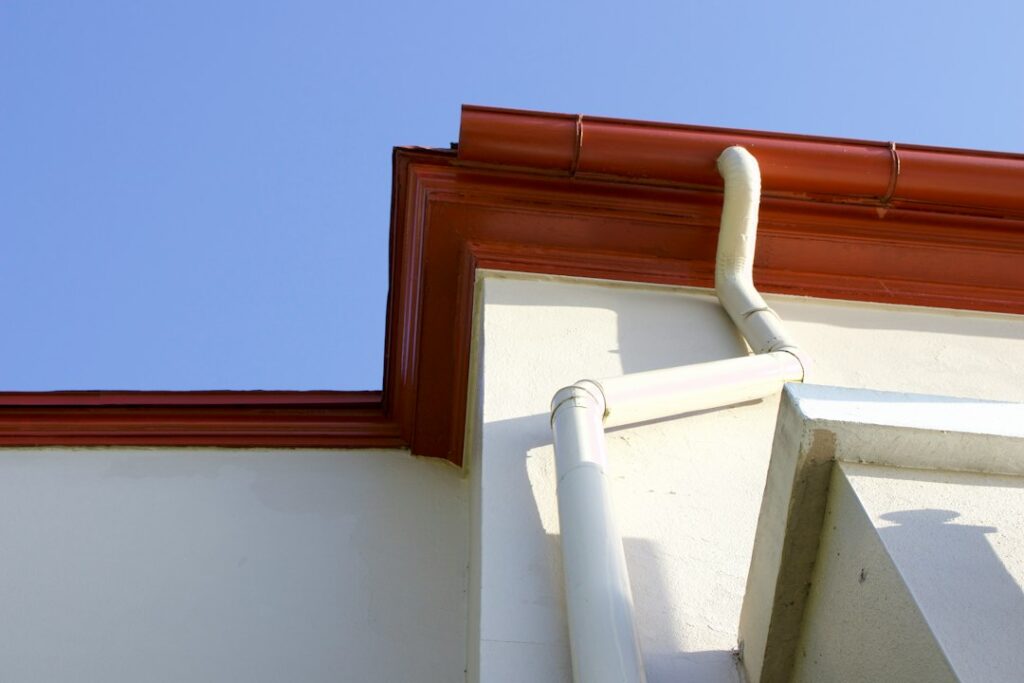
What are soffits and fascia?
Soffits and fascia are the finished components along a roof’s lower edge. The soffit is the visible underside of the roof overhang, while the fascia is the vertical board or trim along the roofline, usually behind or beside the gutters.
Together, they help protect the roof structure, attic, walls, and eaves from moisture and pests. They also provide the transition between the roof and the exterior walls, giving the home a finished appearance.
Although these parts are easy to overlook from ground level, they perform several practical jobs:
- Soffits allow air to enter the attic through intake vents.
- Fascia supports the lower edge of the roofing system and often provides a mounting surface for gutters.
- Both components help keep rain, wind-driven snow, insects, birds, and small animals out of the roof assembly.
- Properly installed trim helps direct water away from vulnerable wood and wall surfaces.
How does a soffit work?
A soffit covers the underside of an overhang, such as the area beneath the eaves. Many soffits include small vents or perforated panels that allow outside air to enter the attic.
This airflow is part of a balanced ventilation system. Fresh air generally enters through soffit vents, warms as it moves through the attic, and exits through higher roof or ridge vents. The movement helps reduce heat and moisture buildup.
In a climate with cold winters, humid summers, rain, and periods of heavy snow, attic ventilation can be especially useful. During winter, warm indoor air that reaches the attic can contribute to condensation and frost. During summer, trapped heat can raise attic temperatures and place additional stress on roofing materials.
Soffit vents cannot solve every attic moisture or ventilation problem by themselves. Blocked insulation, missing air sealing, inadequate upper-level exhaust, or bathroom fans that discharge into the attic can all interfere with proper performance.
What does fascia do?
Fascia is the vertical trim at the edge of the roof. It commonly sits behind the gutter and covers the ends of the roof rafters or trusses. In some homes, the fascia is made from painted wood; other systems use aluminum, vinyl, or composite materials over a wood backing.
The fascia serves several structural and protective purposes. It helps shield the roof edge from rain and wind, gives the gutter system a secure attachment point, and conceals exposed framing. If the fascia is soft, cracked, or decayed, the gutter may pull away or become uneven.
Water damage often begins where roofing, flashing, gutters, and fascia meet. A small leak at the roof edge can gradually affect the fascia board, soffit panels, rafter tails, and exterior wall below. Because these components are connected, damage that appears cosmetic may indicate a larger moisture problem.
Why do soffits and fascia matter in this area?
Homes in Coxsackie may experience a wide range of seasonal conditions, including freeze-thaw cycles, wind-driven rain, summer humidity, and snow or ice along roof edges. These conditions repeatedly expand, contract, wet, and dry exterior materials.
Roof-edge components are exposed to several common stress points:
- Ice and packed snow can place weight against gutters and the lower roof edge.
- Wind can loosen panels, pull at trim, or drive rain behind poorly sealed joints.
- Leaf buildup can obstruct gutters and cause water to overflow onto fascia and soffits.
- Humidity and condensation can encourage decay when ventilation or drainage is inadequate.
- Repeated painting and caulking may conceal deterioration without correcting its source.
Older homes with wood trim may need closer observation, especially where layers of paint have begun to peel or where previous repairs have left gaps. Newer homes can also develop problems if soffit vents are covered by insulation or if gutters are installed with inadequate slope.
What are common signs of soffit or fascia problems?
The first visible warning may be discoloration, but several other clues deserve attention. Common signs include:
- Peeling, blistering, or cracked paint
- Soft spots in wood trim
- Dark staining or streaks beneath the roof edge
- Sagging, loose, or missing soffit panels
- Holes made by birds, insects, or small animals
- Gutters pulling away from the fascia
- Water dripping behind the gutter
- Mold-like growth or persistent dampness
- Icicles that repeatedly form in the same roof-edge area
- Visible daylight or gaps between panels and walls

A simple visual inspection from the ground can identify many problems. Binoculars may help reveal loose fasteners, open seams, or damaged trim without requiring anyone to climb onto the roof.
Do damaged soffits always mean the roof needs replacement?
No. Damage to soffits or fascia does not automatically mean the entire roof must be replaced. The cause and extent of the problem matter more than the appearance of one damaged section.
A localized issue may result from a clogged gutter, failed flashing, a loose drip edge, wind damage, or a small roof leak. In that situation, replacing trim without correcting the water source would allow the damage to return.
More extensive deterioration may indicate long-term moisture exposure, poor attic ventilation, widespread roof-edge failure, or aging roofing materials. The condition of the roof covering, underlayment, flashing, gutters, and framing should be considered together.
This is also why covering decayed wood with new aluminum or vinyl trim may not be a complete repair. The material underneath still needs to be sound enough to support attachments and resist further moisture intrusion.
How can homeowners help protect these components?
Routine exterior observation and basic maintenance can reduce avoidable damage.
Keep gutters and downspouts clear so water can move away from the roof edge. Check that downspouts discharge far enough from the foundation to prevent splashback and repeated wetting near the walls. After strong wind, inspect for loose panels, exposed edges, or damaged flashing.
Avoid blocking soffit vents with paint, insulation, or stored materials. In the attic, insulation should not be packed tightly against the soffit openings unless proper ventilation baffles preserve an air channel.
Trees near the house should also be monitored. Overhanging branches can scrape roofing, drop debris into gutters, and provide access for animals. Trimming vegetation can help, but cutting or climbing near electrical lines presents a separate safety concern.
When does the problem require closer evaluation?
Soffit and fascia issues deserve prompt attention when wood feels soft, gutters are separating from the roof, water is entering the attic, or damage extends along a large portion of the eaves. A sagging roof edge, exposed framing, active leakage, or suspected animal entry can also involve safety and structural concerns.
The most useful evaluation looks beyond the trim itself. It should consider roof drainage, flashing, attic airflow, insulation placement, gutter attachment, and any signs of moisture inside the home.
Understanding the role of these components makes it easier to distinguish normal aging from a developing roof-edge problem. Soffits and fascia are not merely decorative trim; they are part of the system that manages ventilation, drainage, and protection where the roof meets the walls.
